Creating a Brand
Why Your Book's Title Matters More Than You Think for Positioning
October 7, 2026 · 1,041 words
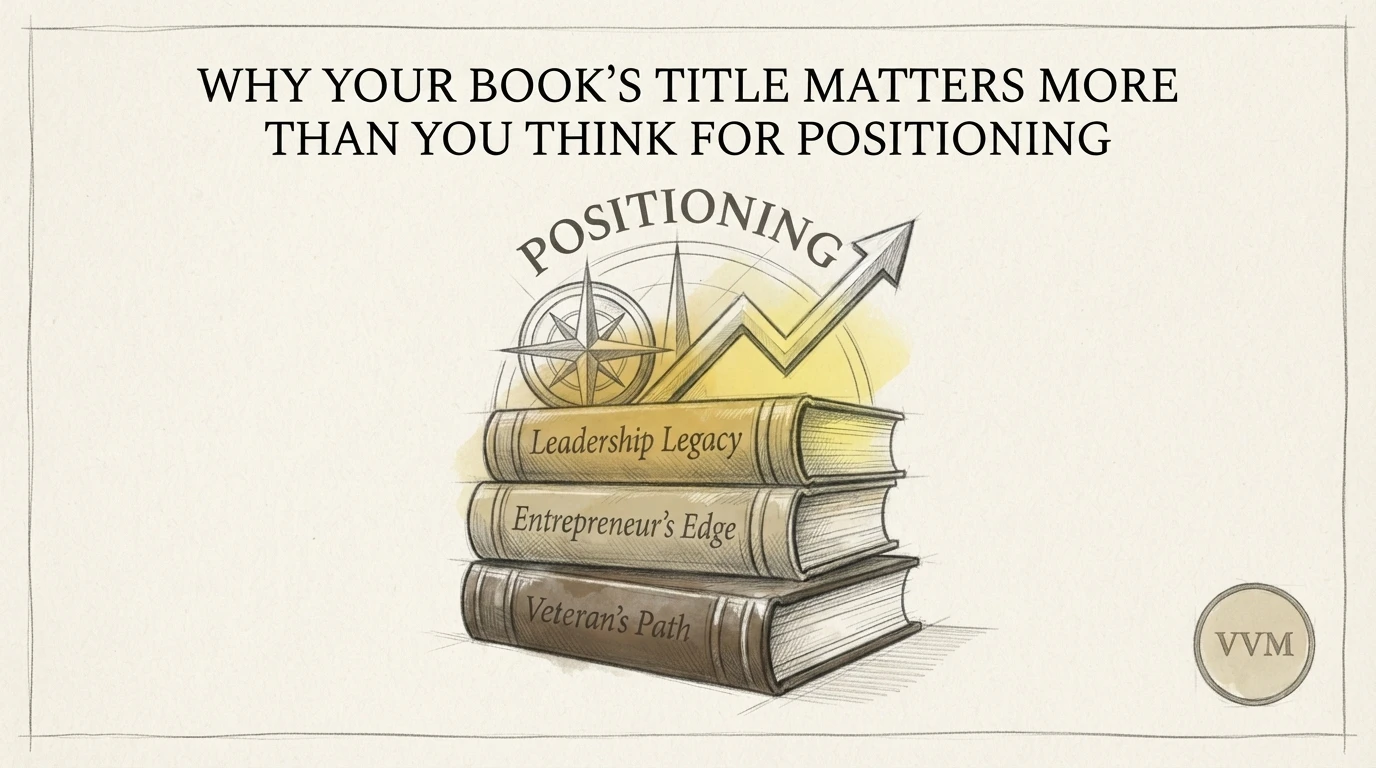
Quick Summary: Your book title is a strategic positioning tool that signals your expertise to potential clients before they even open the cover. Use a sharp title to grab attention and a descriptive subtitle to clarify your niche and promise. Valor & Ventures Media Publishing helps authors craft these essential titles to ensure their books effectively open professional doors.
For a business leader, your book is your business card, your credentials, and your referral engine. Yet most first-time authors treat writing book titles as a creative afterthought, not a strategic asset. That's a costly mistake. Your title is where author positioning starts, and it shapes your book marketing before anyone reads page one. The best book titles act as positioning statements: they signal your niche, build your book branding, and separate real authority from commodity. Good publishing advice starts here, with book title tips for nonfiction titles and business book titles that anchor your author brand strategy before a single page is read.
Table of Contents
- The Title as a Positioning Statement
- Balancing SEO and Professional Credibility
- How Expectations Have Shifted
- Frequently Asked Questions
- Conclusion
The Title as a Positioning Statement
Signals of Authority
Your book title speaks before you do. A client, a podcast host, or a conference planner sees the spine of your book and decides, in seconds, what kind of expert you are. That snap judgment is your author positioning at work, and it happens whether you planned it or not.
A strong title does three jobs at once. It names the problem you solve, it signals who the book is for, and it hints at the result the reader can expect. The 7 Habits of Highly Effective People told you the audience, the method, and the promise in nine words.
Weak titles waste that moment. Vague, clever, or self-referential titles leave readers guessing, and guessing readers rarely buy. Clear book title tips from editors are blunt on this point: pick specificity over cleverness every time.
Think of your subtitle as the clarifying half of the pair. The title carries the hook; the subtitle carries the offer. Together they become your shorthand in every book marketing channel you will ever use, from bios to back covers to speaker introductions.
This matters doubly for leaders and veteran entrepreneurs. Your book often precedes you into a boardroom, so its cover is your first handshake. Before you write chapter one, stress-test the title: would a stranger place you correctly after reading it alone?
Watch: [What Makes a Great Non-Fiction Book Title and Subtitle?](https://www.youtube.com/watch?v=xbeuYGWsM7Q)
Want help pressure-testing yours? Start your book build.
Balancing SEO and Professional Credibility
The Power of the Subtitle
Your main title carries the weight; the subtitle does the work. A short, sharp title grabs attention, but the subtitle tells search engines and readers exactly who the book serves. That single line often decides your author positioning before anyone opens the cover.
Think of it this way: "Lead Without Rank" intrigues people. "Lead Without Rank: A Combat-Tested Framework for Civilian Leadership" converts them. The second version names the audience, promises an outcome, and fits the phrases buyers actually type. That is practical book marketing built into the cover itself.
The risk is going too far. Stuff keywords into a subtitle and you read like a catalog, not a leader. Test each word: does it help a stranger understand the book, or just please an algorithm? Strong book title tips always favor clarity first, search second.
When in doubt, write the subtitle as a promise to one reader. That promise shapes how your market frames you, which is the quiet goal of every published expert.
Ready to sharpen yours? Browse books from other veteran authors to see subtitles doing this work in the wild.
How Expectations Have Shifted
A book title used to be a label. Now it works like a headline, and readers judge your expertise from it in seconds. A veteran founder writing on leadership needs a title that names the problem, promises a result, or claims a clear niche. Vague titles get skipped, while sharp ones open doors to stages, clients, and press. Your readers scan, so the market rewards books that announce their value before page one.

Your title is doing work right now, whether you chose it on purpose or not. Make it work for you. Start your book build with Valor & Ventures Media Publishing and position your expertise before a single page gets read.
Frequently Asked Questions
Q1: How does your book title influence your brand's authority?
A sharp title signals expertise instantly.
Q2: Why does a book title matter more for business leaders than you think?
Clients judge authority before page one.
Q3: What role does a book title play in positioning your expertise?
It frames your niche and promise.
Q4: What are the best tips for choosing a book title that reflects your brand?
Lead with benefit; support with subtitle.
Q5: How do you balance creative expression with SEO when naming your book?
Be creative in title, searchable in subtitle.
Q6: How do book titles impact discovery and sales in the digital age?
Searchable titles rank and sell better.
Q7: Why is a memorable book title important for author branding?
Memorable titles drive referrals and recall.
Q8: Can a strong book title help you build a loyal reader community?
Yes. Clear titles attract aligned readers.
Conclusion
Your title does the positioning work before anyone reads page one. It tells the market who you serve, what problem you solve, and why your voice carries weight. So treat it as a strategy decision, not a creative flourish. Test it against your ideal client's actual words. Cut clever phrasing that blurs the promise. Get the title right, and the book opens doors for years. Get it wrong, and even strong ideas sit unnoticed. Start your book build