Choosing the Right Publishing Partner
What a Real Publishing Timeline Should Look Like
October 7, 2026 · 1,109 words

Quick Summary: A realistic publishing timeline relies on structured milestones like questionnaires, drafting, and review cycles rather than speed. AI-assisted projects typically take three months, while human ghostwritten books require six to nine months for better depth and voice. Valor & Ventures Media Publishing helps authors map these specific stages to ensure a professional launch without the pitfalls of a rushed schedule.
Years of expertise deserve a book, not a rushed draft. Yet "instant publishing" promises usually deliver unpolished work and frustration. This author publishing guide lays out a realistic book publishing timeline, comparing AI-assisted and human ghostwritten paths, and maps each of the publishing process steps: questionnaire, drafts, reviews, and delivery. You will see how a true self publishing timeline, its book production stages, and a sensible book launch timeline fit together. Use this publishing workflow guide as your writing project schedule, your book release schedule, and your publishing industry roadmap.
Table of Contents
- Understanding the Two Main Paths to Publication
- The Core Milestones of a Professional Process
- Working Backwards from Your Launch Date
- Avoiding Common Pitfalls in Your Schedule
- Frequently Asked Questions
- Conclusion
Understanding the Two Main Paths to Publication
Every book publishing timeline starts with one choice: how the words get written. That choice shapes everything else.
The AI-Assisted Path
Here, you supply the ideas through a detailed questionnaire, then software and a light editorial hand turn your answers into chapters. Expect the publishing process steps to move fast: outline in week one, full draft within four to six weeks, then your review rounds. A self publishing timeline on this track often lands near three months. The tradeoff is voice; you must polish the manuscript so it sounds like you, not a machine.
The Human-Ghostwritten Path
A professional writer interviews you, studies your material, and drafts each chapter by hand. Your book publishing timeline stretches accordingly, usually six to nine months, because real drafting and revision take time. The payoff is depth: nuance, rhythm, and a voice that reads as yours on every page. Veterans and busy founders often choose this route when the book anchors a brand or legacy.

The Core Milestones of a Professional Process
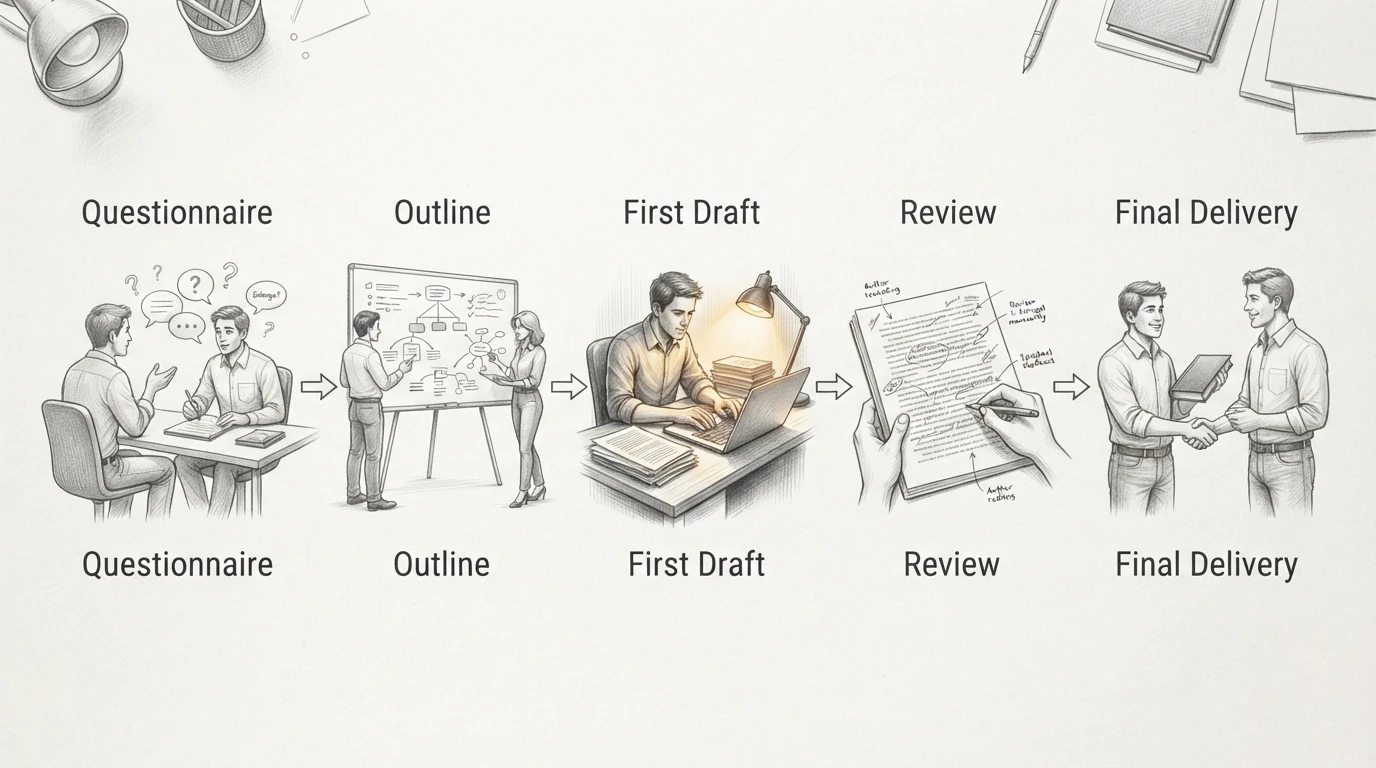
Every legitimate book build follows clear publishing process steps, whether the draft comes from a ghostwriter or an AI-assisted workflow. The milestones matter more than the speed.
From Questionnaire to First Draft
It starts with a structured questionnaire. You talk through your ideas, stories, and goals so the writing team captures your voice, not a generic one. From there, the team builds an outline you approve, and then a first draft arrives, usually within a few weeks. This is where your self publishing timeline begins to feel real.
Review Cycles and Final Polish
You then read the draft and mark it up. A professional team schedules two or three review rounds, revises chapter by chapter, and keeps the timeline honest with set delivery dates. After the final polish comes copyediting, formatting, and a proof you approve. Skipping these milestones is the surest sign of a shortcut shop. Look for them before you sign anything.
Working Backwards from Your Launch Date
Pick the date your book needs to be in readers' hands, then count back. A human-ghostwritten book typically needs 5 to 7 months: questionnaire, outline, first draft, your two review rounds, and production. An AI-assisted build can run in 8 to 12 weeks, but the milestones are the same. Build in buffer time for your own feedback, because that step is where most timelines slip.
Watch: [Timeline For Writing a Book - Plan Your Book Launch](https://www.youtube.com/watch?v=ygS3rQaIfGc)
Work with a publishing team that maps each milestone against your calendar, and the launch date stays realistic instead of hopeful.
Avoiding Common Pitfalls in Your Schedule
Three slips derail most first-time authors. First, writing your manuscript before booking editing, cover design, and distribution, which pushes everything back months. Second, approving drafts slowly, since each review round can add weeks. Third, chasing a launch date instead of a quality bar; a rushed book rarely earns authority. Build in buffer time between milestones and check reviews off promptly. Valor & Ventures Media Publishing's publishing team sequences these steps for you, so see our self-publishing guide for planning help.
Ready to see your real timeline? Start your book build with Valor & Ventures Media Publishing and get a clear plan from questionnaire to published book.
Frequently Asked Questions
Q1: What does a realistic book publishing timeline look like for a first time author?
Four to eight months is typical. Questionnaire and outline take two weeks, drafts two to four months, then editing, review, and delivery. Human ghostwriting takes longer than AI-assisted.
Q2: How do I work backwards from a target publication date to create a launch plan?
Set your launch date, then schedule editing, design, and final delivery before it. Add review weeks as buffers. Each milestone gets a deadline, so nothing lands in the last month.
Q3: How can I coordinate different service providers like editors and designers in my publishing schedule?
Give each provider clear dates tied to the next milestone. Editors finish before layout starts. One point of contact, usually your publisher, keeps handoffs from slipping.
Q4: Why is a structured publishing timeline essential for avoiding author burnout?
Milestones break the work into small, predictable steps. You know what's due this week, not everything at once, so a busy schedule stays sustainable.
Q5: How much time should I allocate for editing and proofreading before publishing?
Plan four to eight weeks total: developmental editing first, then copy editing, then proofreading. Rushing this stage is where most quality problems start.
Q6: What are the biggest risks of rushing your book publishing timeline?
Weak editing, poor design, missed errors, and launch fatigue. A rushed book reads rushed, and readers and reviewers notice.
Q7: How can I effectively manage multiple book releases in a single year?
Stagger the stages. Draft one book while another edits or designs. AI-assisted paths compress timelines, making two releases per year realistic for most authors.
Q8: What is the difference between developmental editing and copy editing in a publishing timeline?
Developmental editing fixes structure, argument, and flow early. Copy editing comes later, correcting grammar, style, and consistency. You need both, in that order, before proofreading.
Conclusion
A real publishing timeline runs on milestones, not magic. You answer a structured questionnaire, review chapter drafts, give notes, and approve final delivery. AI-assisted books move fastest, often within a few months. Human ghostwriting takes longer, but a skilled writer carries your voice with more depth. Either path works if each stage is clear, dated, and yours to approve. Ask for that plan up front, and your book gets done. Start your book build.