Scaling & Growth
Turn Your Book Into a Professional Audiobook
October 8, 2026 · 780 words
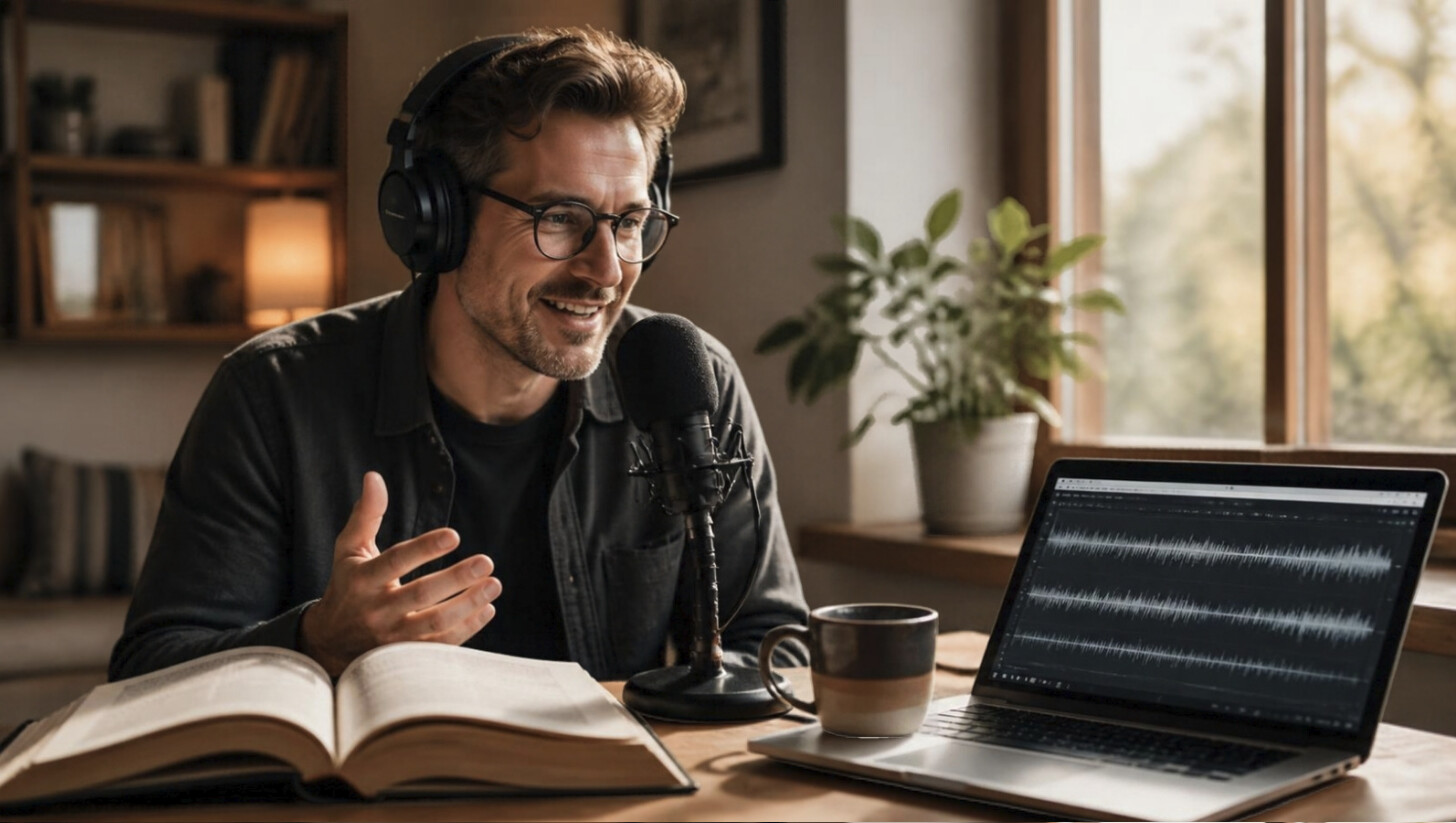
Quick Summary: An audiobook extends a finished manuscript to readers who listen instead of read, often doubling a book's reach. The process runs through narrator casting, studio-quality recording, mastering to distributor specs, and listing on major platforms. Valor & Ventures Media handles the full build so the audiobook sounds as polished as the printed edition.
Most people now spend more time listening than reading. Commutes, workouts, and chores have turned audiobooks into one of the fastest-growing ways people finish a book, and a manuscript that only exists in print is invisible to that entire audience. Turning your book into an audiobook is not a side project. It is a second edition of your book built for ears instead of eyes, and it can reach readers your printed book never will.
This guide walks through what actually happens between a finished manuscript and a finished audiobook: casting a narrator, recording, editing, and getting it listed where listeners actually look.
Table of Contents
- Why an Audiobook Is Worth the Investment
- Choosing the Right Narrator for Your Voice
- From Recording to a Finished, Distributed Audiobook
- Frequently Asked Questions
- Give Your Book a Voice
Why an Audiobook Is Worth the Investment
An audiobook is not just a convenience format. For a business leader, coach, or consultant, it is a second doorway into your ideas for an audience that is often more engaged than a typical reader: people who finish audiobooks tend to finish the whole book, not just the first chapter. That matters when your book exists to build trust and bring in clients.
It also extends your book's shelf life. A title with an audiobook edition shows up in more searches, more store sections, and more recommendation feeds, and it gives you a second launch moment months after the print release, without writing a new book.
Choosing the Right Narrator for Your Voice
The single biggest factor in whether an audiobook feels authentic is the narrator. For a memoir or leadership book, many authors choose to narrate it themselves, since the point is to hear your own voice and cadence. For other projects, a professional narrator matched to the book's tone, whether that's a direct, grounded voice for a business book or something warmer for a personal story, does the job better than the author would.
Either way, a short sample recording of two or three pages should come first. It is the cheapest way to confirm a narrator fits before committing to a full-length recording.
From Recording to a Finished, Distributed Audiobook
Once casting is settled, production runs through a few clear stages: a full read-through recording in a treated studio environment, an editing pass that removes mouth noise, breaths, and mistakes, and a mastering pass that brings the file to the loudness and format specifications every major distributor requires. Skipping that last step is why some self-produced audiobooks get rejected from stores or sound noticeably quieter than everything else in a listener's library.
From there, the finished files go to distribution: Audible, Apple Books, Spotify, and library platforms like Libro.fm and OverDrive, each with its own submission requirements and timeline. A realistic production timeline runs 6 to 10 weeks from casting to a fully live listing, depending on manuscript length and narrator availability.
Ready to give your book a voice? Start your book build with Valor & Ventures Media.
Frequently Asked Questions
Q1: Should I narrate my own audiobook or hire a professional?
Narrate it yourself for a memoir or personal story where your voice is part of the message. Hire a professional narrator for broader commercial appeal or if reading aloud for hours isn't realistic for your schedule.
Q2: How long does audiobook production typically take?
Most projects run 6 to 10 weeks from casting through a live store listing, depending on manuscript length and narrator availability.
Q3: Where does a finished audiobook actually get sold?
Major platforms include Audible, Apple Books, Spotify, and library distributors like Libro.fm and OverDrive. Each has its own technical and metadata requirements.
Q4: What makes an audiobook sound unprofessional?
Unedited breaths and mouth noise, inconsistent volume between chapters, and files that don't meet a distributor's loudness specifications are the most common giveaways.
Q5: Does an audiobook need a different script than the print book?
Usually not, though some authors add a short spoken introduction and trim content that only makes sense visually, like tables or charts.
Q6: Is an audiobook worth it for a business or leadership book?
Yes. Listeners tend to finish audiobooks at a higher rate than they finish print books, which means more of your audience actually hears your full message.
Give Your Book a Voice
An audiobook is not an afterthought to a finished manuscript. It is a second, often more engaged way for people to experience your book, built through careful narrator casting, professional recording, and distribution to the platforms listeners already use. Done right, it extends your reach and your authority well past the print run.