Book Writing Basics
How to Write a Book When You Don't Know Where to Start
October 7, 2026 · 1,071 words
Quick Summary: Stop waiting for inspiration and treat your book as a structured project by creating a simple chapter outline. You can manage the process alone through disciplined drafting or leverage Valor & Ventures Media Publishing for professional ghostwriting and milestone support. Focus on finishing a rough draft first, as momentum matters more than perfection.
Page one stays blank for one reason: most people who want to write a book treat it as a creative mystery, not a deliberate operation. To write a first book, stop waiting for inspiration. Start book one with a plan: outline your book, follow simple writing tips, and build an author workflow that fits your life. This book writing guide shows the writing process steps that actually work.
Table of Contents
- The Anatomy of a Low-Stress Start
- Navigating the Common Pitfalls
- Choosing Your Path to Publication
- Capture Your Legacy Today
- Frequently Asked Questions
- Conclusion
Writing Approaches Compared
| DIY Writing | Valor & Ventures Media Publishing | |
|---|---|---|
| Primary Goal | Creative expression | Legacy building and authority |
| Workflow Style | Unstructured | Structured milestones |
| Best For | Hobbyists | Leaders and experts |
| Typical Hurdle | Isolation and burnout | Time constraints |
How DIY Writing and Valor & Ventures Media Publishing Compare
DIY Writing
This is the solo path: you write your book on your own, with no ghostwriter, editor, or structured system behind you. It suits hobbyists whose main goal is creative expression, though many first-time authors find that when they write first book chapters alone, isolation and burnout slow momentum. If you want to start book projects as a side pursuit, this route tests your discipline more than your talent.
Key strengths
- Full creative control
- Lowest upfront cost
- Flexible schedule
Valor & Ventures Media Publishing

Valor & Ventures Media Publishing pairs your expertise with professional ghostwriting and structured milestones, so leaders can write book manuscripts without clearing their calendars. It fits entrepreneurs and veterans who want to start your novel-length legacy projects and build authority. The trade-off is less full control than DIY, in exchange for guidance and speed.
Key strengths
- Structured milestone workflow
- Ghostwriting and structural guidance
- Built for time-strapped experts, with beginner book tips built in
The Anatomy of a Low-Stress Start
Why Outlining Prevents Overwhelm
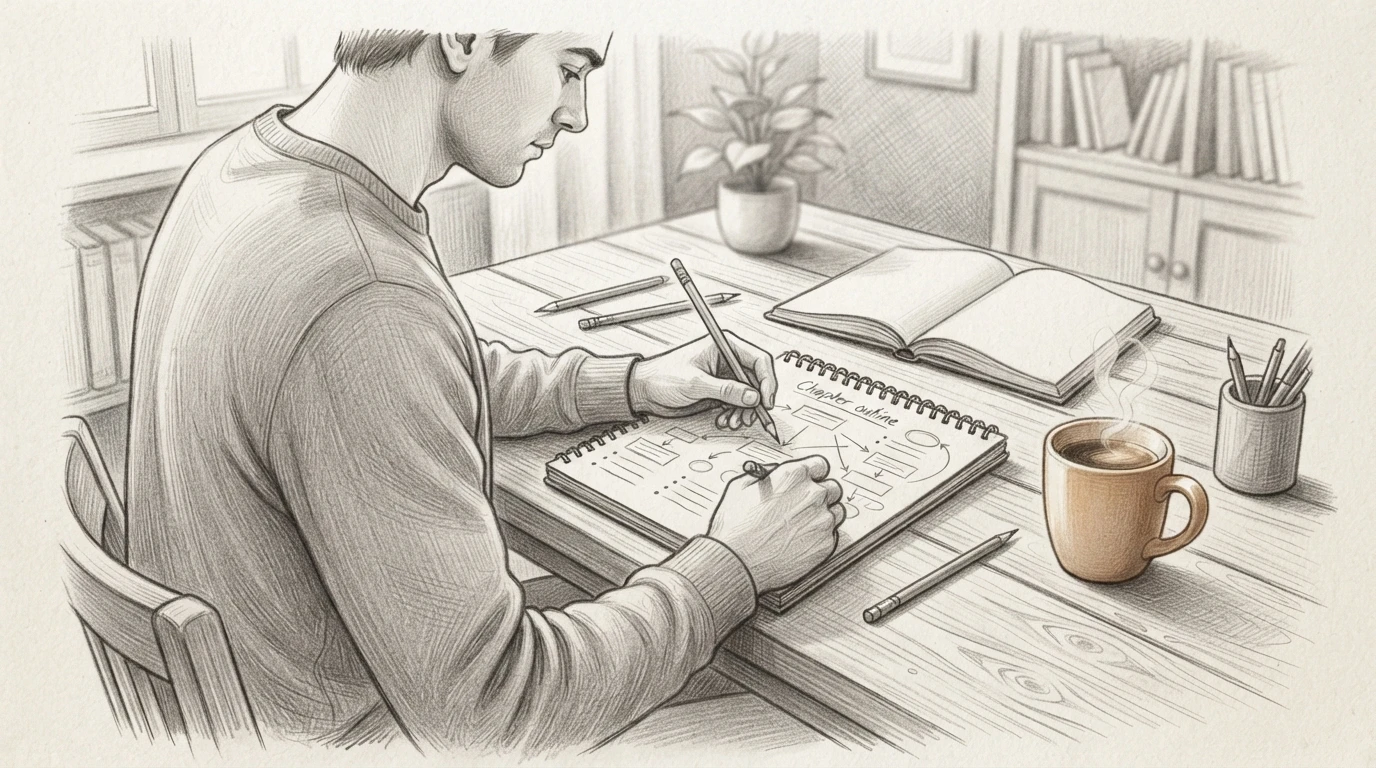
Most people who want to write a book stall at the same spot. They picture a 300-page manuscript, panic, and close the laptop. An outline removes that panic. When you start a book with a short list of chapters, the job shrinks from "write a whole book" to "write one page about one idea."
Try this: write your core message at the top of a page. Under it, list five to eight chapter ideas, one line each. That list is your map. Now you can write your first book one section at a time, without guessing what comes next.
Outlining also protects your message. Each chapter should serve the promise you made on page one. If an idea doesn't fit, cut it now, not at chapter nine.
If you'd rather not map it alone, a guided publishing process can walk you through it.
Navigating the Common Pitfalls
Permission to Write Badly
Most people never start a book because they expect their first pages to be great. They aren't. And that's fine.
Drafts exist to be fixed later. Give yourself permission to write badly, then keep going. A messy chapter beats a blank one every time, because momentum is what actually finishes books. The writers who publish are rarely the most talented. They are the ones who kept typing on the ugly days.
So lower the bar. Write the rough version, warts and all. You can sharpen every sentence once the whole story is on paper.

Choosing Your Path to Publication
Once you start a book, decide how it reaches readers. Traditional publishing takes 18 to 24 months and an agent. Self-publishing puts you in control, but you handle editing and design. Hybrid services like ghostwriting give you a middle path, especially for your first book.
Watch: [How to Publish a Book | Traditional vs. Self vs. Hybrid Publishing](https://www.youtube.com/watch?v=SCKY2UYvQ5c)
You do not have to write a book alone. A publishing partner can help you write your first book without the guesswork.
Capture Your Legacy Today
You don't need more time to write a book. You need a plan and a partner. When you're ready to write your first book, we'll help you start, from core message to finished manuscript, and stay with you through publishing.
Let's capture your legacy today. Start here.
You don't have to write first book alone. Valor & Ventures Media Publishing helps you start book projects, plan your write book journey, and capture your legacy today.
Frequently Asked Questions
Q1: What is the best way to start a book when I have writer's block?
Write one sentence about your core message. A single sentence beats a blank page and gives every chapter a target.
Q2: How can a book outline prevent writing overwhelm?
An outline turns one huge task into small, clear steps. Ten short sections feel doable; one book does not.
Q3: What simple steps help a beginner finish a first book draft?
Set a daily word count, write in the same spot, and finish before you fix anything.
Q4: Is a blog the best way to test book ideas before writing?
It works well. Posts that spark replies show which chapters readers actually want.
Q5: How do I overcome the messy middle when writing a book?
Skip ahead. Draft the chapter you know best, then circle back.
Q6: Do I need a professional editor for my first book?
Yes. You cannot see your own blind spots, and readers notice.
Q7: How much budget should I set aside for self-publishing?
Plan on $2,000 to $5,000 for editing, design, and launch support.
Q8: What is the difference between a rough draft and a polished first draft?
A rough draft is for you; a polished draft is readable by others. Editing bridges the two, so write freely and revise with intent.
When you're ready to write your first book with a team beside you, Valor & Ventures Media Publishing can help. Let's capture your legacy today.
Conclusion
Starting to write your first book comes down to three moves: pick one core message, sketch a simple outline, and accept help along the way. You do not need perfect prose or a writing degree, just a story worth keeping. When you write a book that way, the process feels lighter. Ready to write your first book with guidance at every step? Let's capture your legacy today.