Book Writing Basics
How to Create a Book Outline That Actually Works
October 7, 2026 · 980 words
Quick Summary: A strong book outline acts as a mission plan that prevents you from stalling mid-draft. Whether you are writing fiction or nonfiction, use a flexible framework to map your core objectives while allowing room for creative evolution. Valor & Ventures Media Publishing offers professional support to help authors pressure-test these structures and keep their writing projects on track.
If you stall at chapter three, you do not have a writing problem. You have a navigation problem. A strong book outline is your mission brief, and this author outline guide shows you how to create book outline frameworks that keep you on target. Whether you need to structure your book as a nonfiction book outline or build fiction book structure, the outline writing process here covers both. These book planning tips help you choose the best book outline method and finish the draft. Writing book outline pages gets easier once you commit to one system.
Table of Contents
- Why You Need a Mission Plan
- Flexible Frameworks for Any Genre
- Execution and Evolution
- Start Your Book Build
- Frequently Asked Questions
- Conclusion
Why You Need a Mission Plan
Every mission starts with a plan. Writing a book works the same way. When you create book outline pages before you write, you protect the months of effort ahead from stalling out halfway through chapter five.

Plotter vs. Pantser
Writers fall into two camps. Plotters map the whole route before they start. Pantsers write by feel and figure out the story as they go. The names come from "flying by the seat of your pants."
Neither style is wrong. But pantsers are the ones who get lost. A loose outline works for both types because it structure your book without boxing in your creativity. Even three bullet points per chapter will keep you moving when motivation dips.
The military calls this a mission plan: know the objective, sketch the route, adapt as needed. That's how you finish.
Start your book build with a simple plan. Structure your book around your strongest ideas first, then let the outline create book outline support as you draft.
Flexible Frameworks for Any Genre
A good outline bends with the book. Fiction and nonfiction need different frames, but both should fit on a few pages and survive change. Pick the frame that matches your material, not the other way around.
Building the Nonfiction Roadmap
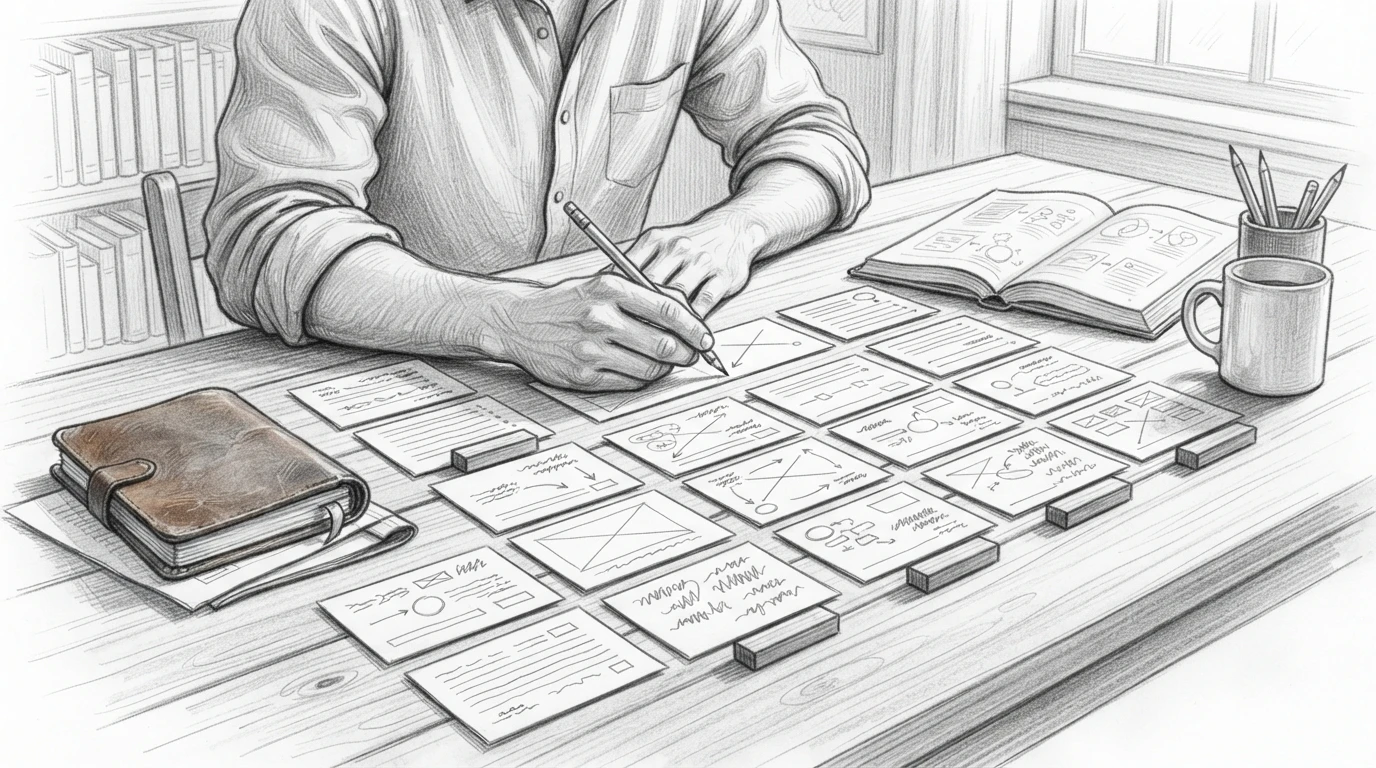
Start with your promise to the reader. State the problem, then list every point that proves your answer. Sort those points into a natural order: chronological, step-by-step, or problem-to-solution. Each becomes a chapter. Add one case, story, or lesson per chapter so readers can apply it. If a point does not support the core promise, cut it now.
The Fiction Core
Fiction runs on structure, not plot notes. Use a simple three-act frame: setup, confrontation, resolution. Define three things before you draft - what your hero wants, what blocks it, and how it ends. Outline each act as five to eight key scenes. Leave gaps; you will fill them while writing, and that is the point.
Execution and Evolution
Mid-Draft Changes
Your outline is a map, not a contract. Around chapter six, you will see gaps or better angles. That is normal, and it means the book is working. Make edits in the outline first, then carry them forward, so you never lose the thread.
Adjust the map mid-march, not the mission. A revised outline keeps you moving; a scrapped one stalls the manuscript.
Keep three habits: log every change in one page, update chapter summaries weekly, and never rewrite a finished chapter until the full draft exists. Discipline here is the same discipline you already run operations with.

Start Your Book Build
Your outline is the hard part. The writing gets easier once it exists. If you want a team to pressure-test your structure, match you with a ghostwriter, and keep the project on schedule, Valor & Ventures Media Publishing can help.
Start your book build today and turn your expertise into a finished manuscript.
Watch: [How to Outline a Nonfiction Book | Dead Simple Process](https://www.youtube.com/watch?v=jHEws-adfuA)
Your outline is the start; a finished book is the goal. Start your book build with Valor & Ventures Media Publishing and turn your expertise into a published manuscript.
Frequently Asked Questions
Q1: How can a book outline help you finish your first draft faster?
It removes daily decisions, so you just write.
Q2: What are the best methods for outlining a book if you are a beginner?
Try a simple chapter-by-chapter list or three-act sketch.
Q3: Can you change your book outline while you are writing the manuscript?
Yes. Treat it as a living map, not a contract.
Q4: How does an outline improve the structure and pacing of a novel?
It spreads conflict evenly, preventing saggy middles.
Q5: What is the difference between a plotter and a pantser when writing a book?
Plotters outline first; pantsers discover the story as they write.
Q6: Should I use a spreadsheet to outline my non-fiction book?
Yes. Columns for chapter, promise, and key points work well.
Q7: How do you create a character arc within your book outline?
Note each character's starting belief, breaking point, and final change.
Q8: Is it better to plot your book before you start writing?
Usually, yes, especially for first-time authors. Even a loose outline prevents stalls. Start your book build at /publishing/start.
Conclusion
A book outline is a working map, not a cage. Pick one method, fit it to your genre, and revise it as you write. Scene cards beat pages of notes. Regular check-ins with your outline catch drift early, before it becomes a stalled manuscript at chapter seven. The veterans and leaders who finish their books are rarely the most talented. They are the ones who knew where the next scene or chapter started, every time they sat down to write. Start your book build.