Creating a Brand
How Business Owners Turn One Book Into Years of Content
October 7, 2026 · 1,752 words
Quick Summary: Repurposing a business book into a year-long content strategy turns your expertise into a scalable engine for articles, social posts, and talks. By breaking chapters into micro-themes and mapping them to a calendar, you eliminate the need for constant content creation. Valor & Ventures Media Publishing offers ghostwriting services to help busy founders capture their insights and transform them into a lasting authority platform.
You have spent years mastering your craft in the defense sector or on the front lines of business, yet your best insights sit trapped in your head, shared only with a small circle of colleagues. That is the real problem this guide solves. Your expertise is ready to work harder.
Here is the shift: content repurposing turns one finished manuscript into twelve months of articles, social posts, and talks. When you repurpose business book chapters the right way, a single project becomes a full book content strategy, not a one-time launch. This article walks through the tactics step by step, covering author content marketing, thought leadership content that clients actually read, and book marketing tactics that scale without hiring a content team. It is a practical content marketing guide for leaders who have earned their voice but lack the time. Your book is the seed. We will show you how to grow it.
Table of Contents
- The Book as Your Authority Foundation
- Breaking Down Your Book for Year-Long Repurposing
- Leveraging Book Content for B2B Authority
- Overcoming the Entrepreneurial Bottleneck
- Common Mistakes in Content Repurposing
- Start Building Your Legacy
- Frequently Asked Questions
- Conclusion
The Book as Your Authority Foundation

Why Short-Form Content Needs a Long-Form Anchor
Daily posts and LinkedIn updates burn out fast when nothing sits underneath them. A book is that underneath. It gives every week of content a spine, so your posts build on a fixed point instead of wandering. When you repurpose business book chapters into articles, talks, and social posts, you stop chasing topics. You already picked them, ordered them, and argued for them. That is why content repurposing works best from long form down, never the reverse. Shorts without an anchor sound like everyone else. Shorts built from a book sound like you.
Defining Your Core Message
Before you map a book content strategy, name the one idea you want to own. Not five ideas. One. Write it as a sentence a client could repeat back: who you help, what changes, and why it works. Every chapter then proves a piece of that claim. This focus does double duty in business book marketing, because buyers and podcast hosts remember a single sharp message far longer than a broad resume. It also makes B2B content creation easier, since each chapter becomes a themed month. That is how you scale content strategy without hiring a newsroom.
Pick your core message first. A vague book becomes vague content, and vague content converts nobody.
Breaking Down Your Book for Year-Long Repurposing
A finished book holds more raw material than most owners realize. Twelve chapters can become a full year of posts, articles, emails, and talks if you repurpose your business book with a plan instead of ad hoc picks. The trick is seeing each chapter as a filing cabinet, not a single unit.
Extracting Micro-Themes from Chapters
Read one chapter and list every distinct idea it makes. Most chapters carry five to eight micro-themes: a story, a framework, a warning, a question readers ask. Write each one on its own line. A chapter on hiring might yield "why references fail," "the 30-day onboarding check," and a war story about your worst hire. Ten chapters at five themes each gives you roughly 50 pieces of seed content before you write anything new.

The 52-Week Content Roadmap
Now sort those seeds into a 52-week book content strategy. Assign one micro-theme per week, then choose a format: a short LinkedIn post one week, a longer article the next, a talk segment after that. Themes that connect to current events get slotted near relevant dates. Leave four weeks open for newsjacking or audience questions. Done once, this calendar removes the "what do I post?" panic for the entire year, and you can adjust it as your book content strategy evolves.
Let's turn your dreams into a reality with Valor & Ventures Media Publishing.
Leveraging Book Content for B2B Authority
Turning Chapters into Keynote Presentations
Your book is a speaker's kit waiting to happen. Each chapter already holds a clear argument, a story, and a takeaway. That's the structure of a good talk, so you don't need to build one from scratch.
Start by picking your three strongest chapters. Strip each one down to a single idea, one client story, and one lesson your audience can use on Monday. A 5,000-word chapter becomes a 20-minute keynote with very little new writing.
When you repurpose business book material this way, you also build credibility in the room. A published author gets introduced differently. Buyers and conference planners see the book as proof you know your subject, not just an opinion on a slide.
Map each talk back to one chapter, then reuse that same outline for webinars, podcast interviews, and panel appearances. One chapter, four stages, zero extra research.
Watch: [DAY 2: Turn Your Draft Notes into a Stage-Ready Keynote - in less than 2 hours!](https://www.youtube.com/watch?v=HJeuEywdm8Y)
Tip: Record every talk you give. The transcript becomes blog posts, LinkedIn articles, and follow-up emails, so one speech feeds your pipeline for months.
If you want your chapters staged for stages and sales calls, Valor & Ventures Media Publishing can help shape them for the rooms where deals actually happen.
Overcoming the Entrepreneurial Bottleneck
Every founder hits the same wall. You know your book could power a year of articles, posts, and talks. But writing it means months you don't have, so the manuscript sits in a folder while the ideas leak away one busy week at a time. That is the bottleneck: expertise trapped in your head, not on the page.
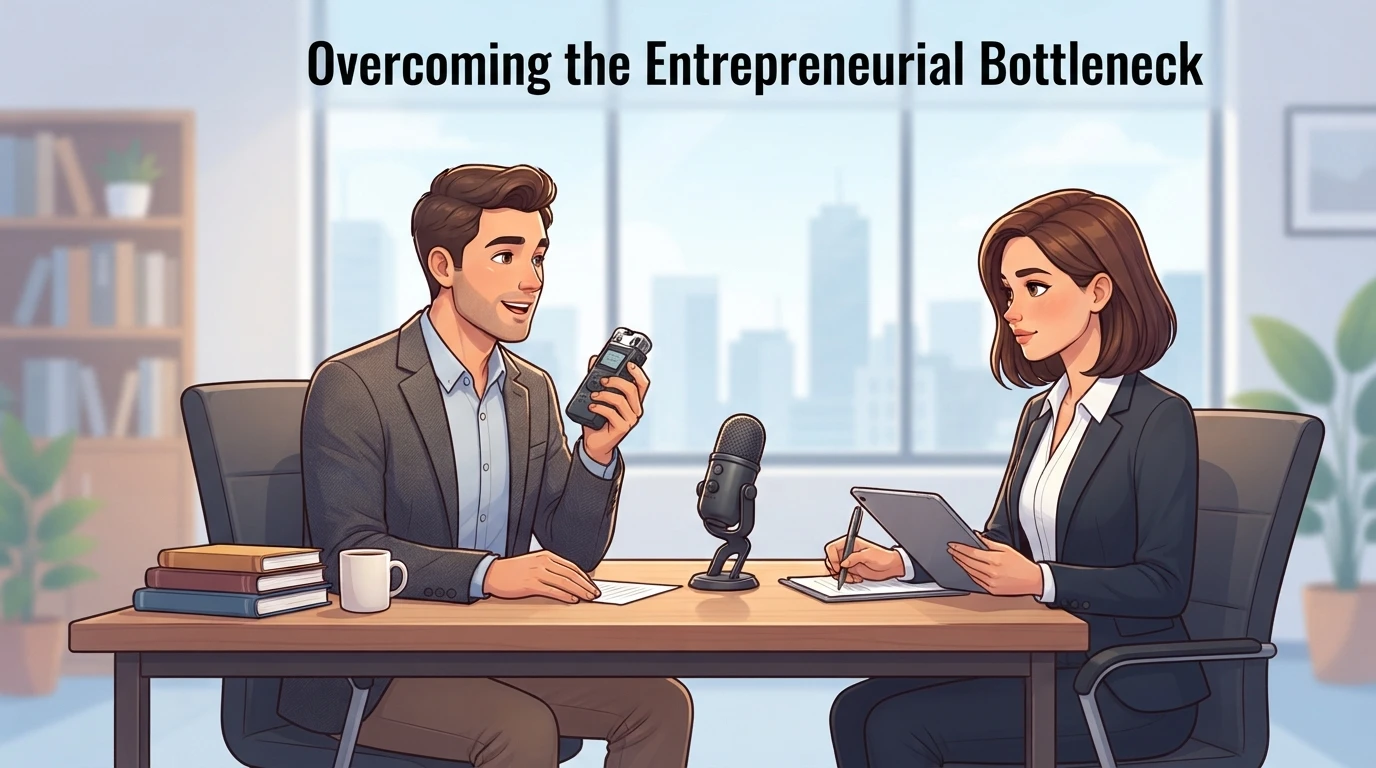
Assisted ghostwriting breaks it. You talk, and a writer plus AI tools shape your voice into chapters. You spend two or three focused hours a week instead of two hundred. The draft keeps moving even when your calendar doesn't.
The process is simple. You record your stories and hard-won lessons. A ghostwriter turns those recordings into clean chapters, then you review and correct anything that misses your intent. Your judgment stays in charge; the labor doesn't have to be yours.
The payoff compounds. One book chapter can become a keynote outline, a LinkedIn series, and a trade article. But none of that happens while the manuscript is stuck. Veterans and defense leaders already know the value of a solid operations plan, and this is one: assign the writing, keep the authority, ship the book. Valor & Ventures Media Publishing's ghostwriting process is built for exactly this handoff, so your book stops being a someday project and starts generating content this year.
Common Mistakes in Content Repurposing
Most repurposing fails for the same few reasons. Spot them early and your book keeps working for you.
Copy-paste syndication. Dropping a full chapter onto LinkedIn reads like homework. Each platform needs its own length, tone, and hook. Pull one idea, not the whole chapter.
Recycling without a plan. If you lift excerpts at random, you'll repeat yourself by March and run dry by summer. Map your chapters to a content calendar first.
Losing your voice. Ghostwriters and AI tools can smooth your prose, but readers follow you because of how you think. Keep your stories and phrasing intact.
Selling too hard. Every post that ends with "buy my book" trains people to scroll past. Lead with value; mention the book when it genuinely helps.
Ignoring results. Track which posts get replies and shares. Double down on what works.
Start Building Your Legacy
Your book is already written in the rooms you've led, the missions you've run, and the lessons you paid for. Publishing it turns those years of experience into content that works for you long after the launch day. One chapter becomes a talk. One story becomes a month of posts.
If you're ready to stop sitting on your story, let's turn your dreams into a reality. Start here.
Your expertise is already there. You just need it on the page, then working for you every week after. Valor & Ventures Media Publishing can help you write it, publish it, and turn it into years of content. Let's turn your dreams into a reality at /publishing/start.
Frequently Asked Questions
Q1: How can I turn one book into a long-term content strategy?
Break each chapter into blog posts, social threads, and talks planned across a full year.
Q2: How do I transition from writing blog posts to structuring a professional business book?
Group related posts by theme, then build chapters around each theme.
Q3: How do I use my book to build authority as a business leader?
Share chapters as articles and talks; a published book signals real expertise.
Q4: How can business owners effectively edit blog content into a cohesive book?
Fix repetition, match your voice, and add transitions connecting each section.
Q5: What are the advantages of testing book chapters as blog posts?
Reader feedback shows which ideas resonate before you commit them to print.
Q6: How can I overcome the overwhelm of writing a book as a busy entrepreneur?
Write short daily sessions; a draft grows faster than you expect.
Q7: What is the best way to maintain consistency when blogging a book?
Publish weekly and batch chapters in advance to stay ahead.
Q8: How much content is actually needed to start drafting a book?
Twenty to thirty solid posts usually hold enough material for a first draft.
Ready to begin? Let's turn your dreams into a reality at Valor & Ventures Media Publishing's publishing/start page.
Conclusion
One book can carry your ideas far beyond its final page. Your chapters become articles. Your stories become social posts. Your strongest arguments become talks, workshops, and podcasts. The work is done once; the reach lasts years.
The method is simple. Mine each chapter for its core ideas, break those ideas into smaller pieces, and schedule them across the year. Fit the content to each platform instead of copying it everywhere. Then track what resonates and reuse the winners.
For busy founders, a book is the most efficient content engine you own. You already did the thinking. Repurposing just lets more people benefit from it, week after week, without adding new work to your plate. Let's turn your dreams into a reality