Scaling & Growth
From Book to Coaching Program: What Actually Transfers
October 7, 2026 · 1,996 words
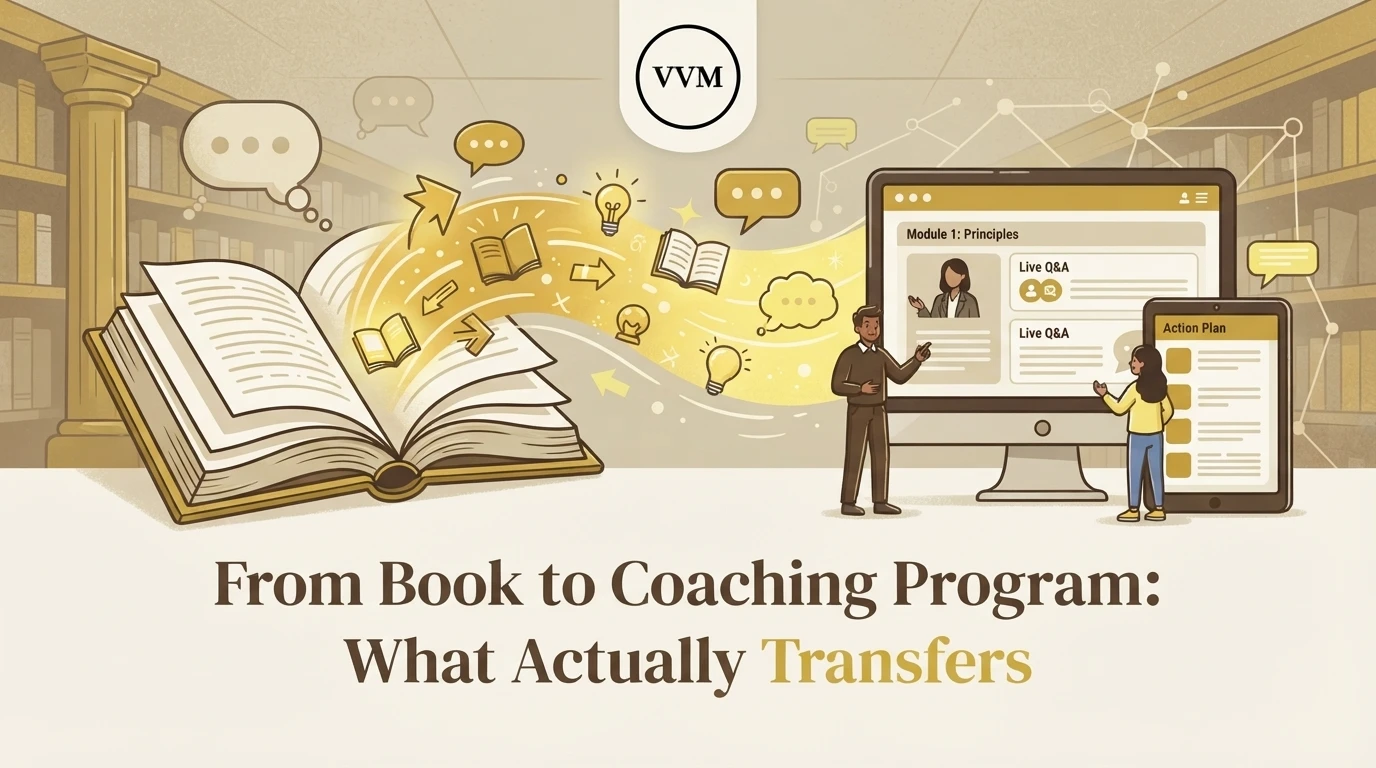
Quick Summary: A book provides information, but a coaching program must deliver specific results through active practice and accountability. To bridge this gap, convert your book chapters into modular sessions focused on client outcomes rather than just theory. Valor & Ventures Media Publishing helps authors design these frameworks from the start to ensure the manuscript functions as both a lead magnet and a curriculum.
A book is more than a calling card. For entrepreneurs, the finished manuscript becomes the blueprint for an entire coaching program. Many authors stop at the final chapter and never create coaching program material from what they already wrote. This program development guide shows the shifts in delivery, structure, and engagement needed to launch coaching program offerings from your book coaching work. Whether you plan online coaching programs, leadership coaching programs, or a new entrepreneur coaching model, your chapters hold ready-made coaching business ideas drawn from proven business coaching books. Here, we'll show how to create coaching program curriculum that actually transfers. When you're ready, start your book build at /publishing/start.
Table of Contents
- The Strategic Shift From Reader To Client
- Mapping Your Book Framework Into A Curriculum
- Leveraging Authority For Premium Offers
- Testing Methodology Through A Pilot
- Why Expertise Scaling Matters Now
- Mistakes To Avoid In The Translation
- Frequently Asked Questions
- Conclusion
The Strategic Shift From Reader To Client
Information Versus Transformation
A book hands a reader information on their own schedule. They read it, underline a few passages, and close the cover. If they act, they act alone. When you create coaching program content from that same material, the job changes. Your client now wants a result, not a summary, so you have to redesign the experience around their progress rather than your argument.
That shift touches three things. First, the frame. A chapter explains why a method works. A coaching session asks, "Where are you stuck this week?" and applies one piece of that method directly. Second, the sequence. Books follow a logic that reads well front to back; programs follow the order clients actually change, which often means starting where the pain is loudest. Third, the proof. A reader judges your book by its ideas. A client judges your program by the gap between week one and week eight.
So before you launch coaching program offers, audit each chapter and ask one question: what does this ask the reader to do? Everything that only explains gets rewritten as practice, feedback, or accountability. That is the real translation, and it is where most authors stall. 
When you are ready to turn your manuscript into a working curriculum, a structured book build gives you the backbone.
Mapping Your Book Framework Into A Curriculum
Modularizing Your Chapter Structure
A book flows. A coaching program loops. That single difference shapes everything you do next.
Readers move through your chapters once, in order. Clients revisit the same skills until those skills stick. So when you map your book into a curriculum, stop thinking in chapters and start thinking in modules. Each module should carry one outcome the client can point to, not one topic the reader can skim.
Start by listing what each chapter asks the reader to do. Most business and leadership books hide an exercise, a checklist, or a decision inside every section. Those action points are your session activities. The surrounding explanation becomes pre-work or a short lesson, and the framework at the heart of the book becomes the spine that holds the modules together.
Then sequence for transformation rather than logic. Your book might open with history and close with tactics. Clients usually need the tactics first, with theory delivered just in time. Rearrange without apology.
Aim for six to twelve modules. Fewer and you have a workshop, not a program. More and clients stall out before they see results.
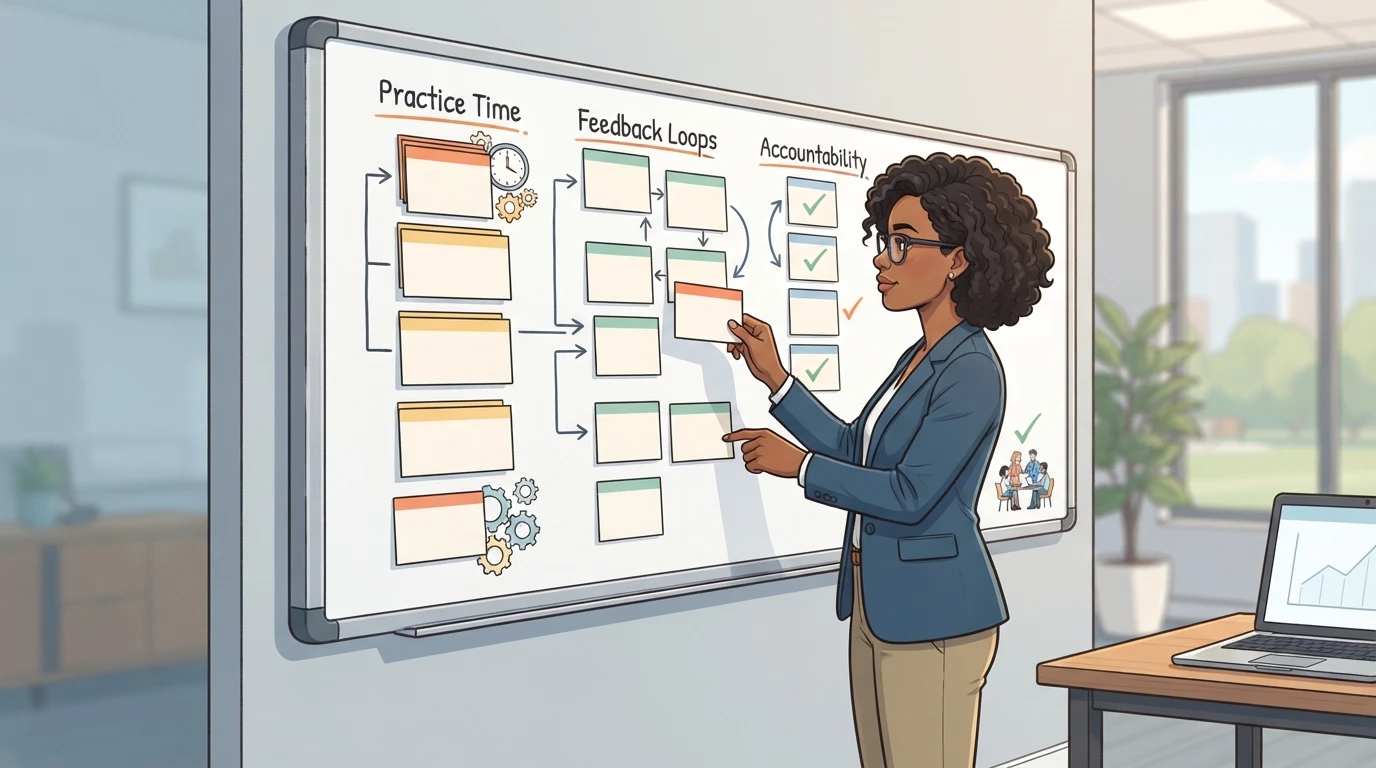
This modular map also tells you what your book left out: practice time, feedback loops, and accountability. Those gaps become your coaching value, and the reason to launch coaching program offers alongside the book rather than after it.
When you're ready to turn your outline into a working structure, Valor & Ventures Media Publishing's book build process gives you a framework designed to teach, not just to read.
Leveraging Authority For Premium Offers
The Book As A Strategic Lead Magnet
A published book changes how buyers price your time. When a prospect has read 200 of your pages, the "who is this person?" question is already answered before your first call. That removes the biggest friction in selling anything premium, because trust was built offline, at scale, without you in the room.
The mechanics are simple. Offer the book cheap or free. The reader who finishes it is pre-qualified: they understood your framework, agreed with your diagnosis, and now want the outcome. Those readers convert to high-ticket coaching at rates cold outreach never touches, and they arrive ready to buy rather than ready to be convinced.
Not every reader becomes a client, and that is fine. The book works as a filter, not a megaphone. It sorts your audience into three groups: people who will never buy, people who might, and people who are ready now. Your follow-up should only spend energy on the second and third groups.

To make the filter work, the book must end with a visible next step. Reference your program in the final chapter, include a working link or invitation, and make the path from last page to first session obvious.
A strong ghostwritten business book does this by design, with the bridge built into the manuscript instead of bolted on afterward.
Testing Methodology Through A Pilot
Designing A Low-Stakes Beta Group
Before you sell the program, teach it. A pilot cohort of 5 to 10 clients is the cheapest research you will ever run. Your book gives them structure; the pilot shows you where the structure breaks.
Here is what to watch for. Some chapters turn into sessions naturally. Others read well but teach poorly, because readers can absorb a lesson in ten minutes while clients need practice, feedback, and accountability to change a behavior. That gap is the real work of translation.
Pick beta clients from your book's ideal reader, not your easiest sale. Ask them to flag confusing steps and, more importantly, to name the moment things clicked. Keep the price symbolic but real. People who pay show up.
Track three things: which modules run long, which exercises fall flat, and which outcomes clients actually report. Afterward, rewrite the program around evidence, not the table of contents.
Watch: [How To Beta Test Your Coaching Program](https://www.youtube.com/watch?v=H7ixlH674zE)
One clean pilot cycle usually saves you from a full relaunch six months later. That is the trade: slower launch, stronger program. When you are ready to build the book behind it, start your book build.
Tip: Record every beta session. The transcripts become your revised workbook, your sales page proof, and your future case studies.
Why Expertise Scaling Matters Now
Your time is the bottleneck. Every hour of one-on-one consulting caps your income, and when you stop working, the revenue stops. Coaches who package their method into structured programs break that ceiling. The evidence is hard to ignore: the 2025 ICF Global Coaching Study found coaching revenue reached $5.34 billion worldwide, with practitioner numbers up 15% since 2023.
Here's the catch. Most experts build the program backward. They write the book as a credibility piece, then scramble to invent a coaching offer from scratch. That split creates two brands, two messages, and double the work.
A smarter path exists. A book already contains your framework, your sequence, and your proof. Translated correctly, its structure becomes the backbone of a program clients finish and recommend. That translation is the whole game, and it starts with understanding what actually transfers from page to program.
Mistakes To Avoid In The Translation
The most common error is copying chapters as lessons. A chapter explains; a lesson makes someone do the work. If your module reads like the book, cut it and rebuild around one action.
Second, resist the urge to include everything. A book can carry twenty ideas. A coaching program should carry three or four, practiced until they stick. Depth beats coverage.
Third, don't skip the accountability layer. Readers hold themselves accountable; clients expect you to. Build check-ins, deadlines, and feedback into the structure itself.
Fourth, watch your pricing logic. Charging per hour of content undervalues the outcome you deliver. Price the transformation, not the page count.
Finally, avoid building the program before testing it. Run one small cohort from your book's framework first, then fix what breaks. A veteran author we worked with rebuilt his leadership book into a six-week program only after two live cohorts showed which chapters actually changed behavior.
Your book gives you the map. The program is the guided march. Ghostwriting support can help you plan both, but only if you design them as two different tools from day one.
Your book holds the framework your coaching program needs, but turning chapters into sessions takes planning. Valor & Ventures Media Publishing can help you shape both. Start your book build at Valor & Ventures Media Publishing today.
Frequently Asked Questions
Q1: How can I turn my book's framework into a structured coaching curriculum?
Map each chapter to one client outcome, then reorder by results, not logic. Your framework becomes weekly modules; exercises become homework and worksheets.
Q2: How do I use my book as a strategic lead magnet to scale my coaching business?
Offer a chapter as a free download, then invite readers to a short assessment or call. The book filters for people who already trust your method.
Q3: How do I leverage my book to establish authority for premium coaching offers?
Your book proves your method exists and works. Mention it in every pitch and sales page, so premium pricing feels earned rather than risky.
Q4: Which sections of my book are most valuable for high-ticket coaching clients?
Your diagnostic chapters and frameworks. Clients pay for applied structure, not background stories or research summaries.
Q5: What are the key differences in content delivery between a book and a live coaching program?
A book explains; coaching applies. Programs need feedback, accountability, deadlines, and live interaction that a reader never gets from pages.
Q6: How can I test my book's methodology through a pilot coaching program?
Run a small beta group at a discounted rate. Gather results, refine your modules, then use their outcomes as proof for full pricing.
Q7: What mistakes should I avoid when moving from passive reading to active coaching?
Don't just reread chapters aloud. Skip nothing on accountability, set clear milestones, and resist cramming the whole book into one program.
Q8: How should I price a coaching program derived from my book's content?
Price against the client's outcome, not your page count. Start near comparable group programs, then raise fees as documented results accumulate.
Ready to build the book behind your program? Start your book build at [Valor & Ventures Media Publishing](/publishing/start).
Conclusion
A book and a coaching program share the same expertise, but they work differently. Your chapters become modules, your framework becomes a step-by-step method, and passive reading turns into guided practice. What changes most is the reader: someone who consumes information becomes a client who needs accountability, feedback, and results. Structure first, then delivery. If your book already teaches a clear framework, you are closer to a working program than you think. The translation takes editing, not a rebuild. Start your book build.